RiverSweeps games: scope, evidence and the right next step
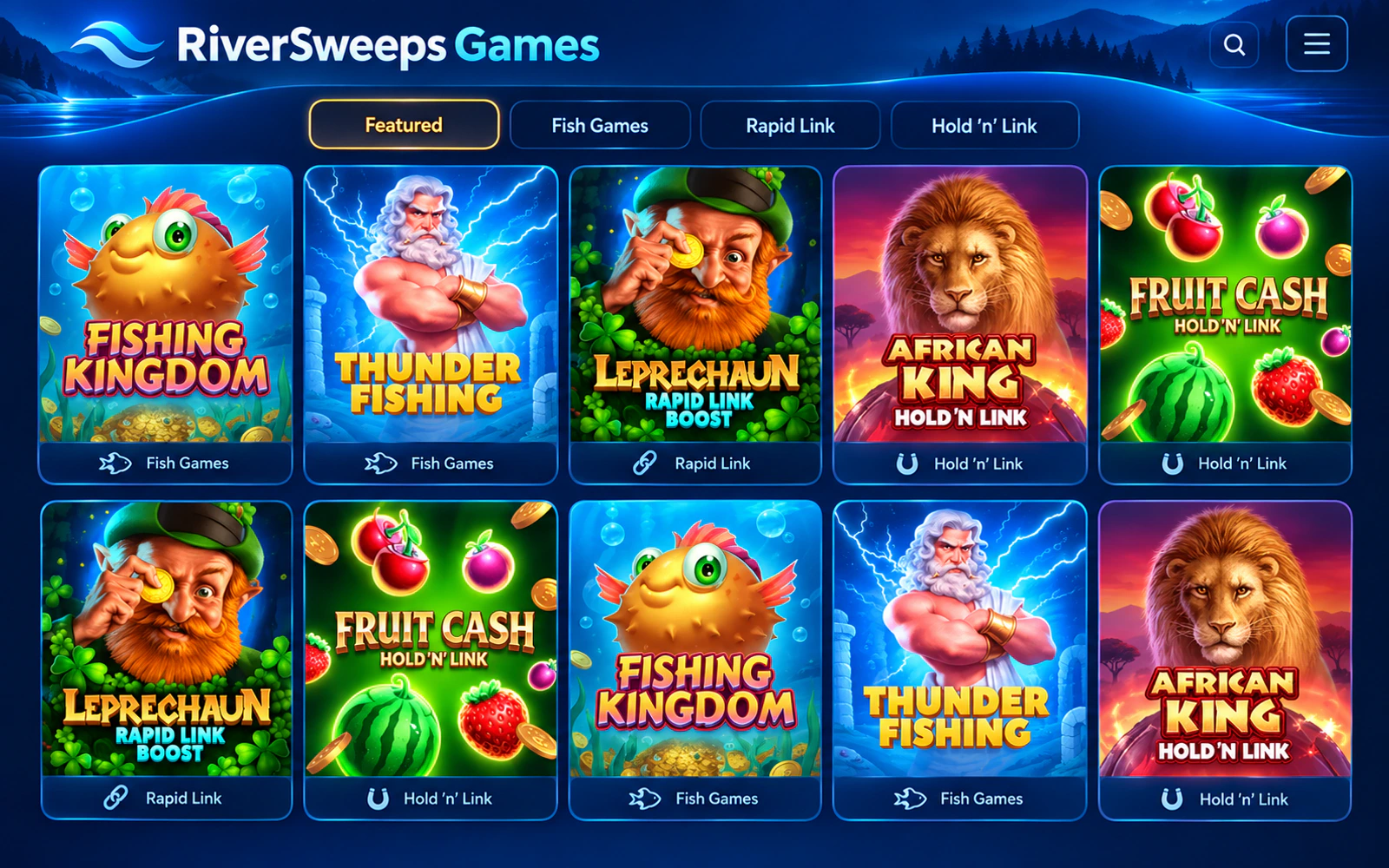
A game catalog is useful only when it answers more than how many thumbnails appear in a lobby. Operators need to know how the library is organized, how current content is verified, which devices present it well and how the game experience connects with accounts, support and location workflow. Players need a direct route to the supported environment rather than a B2B sales inventory.
This page provides the broad catalog view: game families, access context, content evaluation and the connection between the library and the wider operating system. Fish-game and slot-specific questions belong to their category pages; player login belongs to Play, and cashier, reporting and permissions belong to Software.
Explore the catalog by access route and game family through play RiverSweeps online, RiverSweeps app download, RiverSweeps fish games and RiverSweeps slots.
Current search results in this market often compress a complex operating decision into a game count, a price, a download button or an unsupported promise of speed. This guide takes a different approach: it identifies the user, the task, the evidence and the responsible handoff. That makes the page useful after the promotion or interface changes.
Who this guide is for
The same RiverSweeps page can be discovered by people with very different responsibilities. The table below identifies the intended readers and the decision each one should be able to make after reading.
| Reader | What this page should help them determine |
|---|
| Prospective operators | Need to understand category breadth and how content fits the intended audience and device plan. |
|---|
| Current operators | Need a maintainable way to review catalog changes, lobby organization and staff questions. |
|---|
| Players | Need the official Play route, not a promise that every title appears in every account. |
|---|
| Distributors | Need to demonstrate content accurately without publishing unstable counts or unsupported availability claims. |
|---|
When a question moves beyond the RiverSweeps games library, follow the contextual links near the end of this guide. That separation is intentional: a player route, a device installer, a protected dashboard and a commercial consultation should never be presented as if they were the same task.
What to evaluate in practice
Use the following points as a working agenda. They are written to expose handoffs, assumptions and evidence that a short feature list usually misses.
Organize by player decision
A useful lobby helps people recognize a game family and choose without reading a technical taxonomy. Category names, artwork and navigation should remain consistent across the devices used in the approved deployment.
During a demonstration, ask the presenter to show this point in context and explain who owns the decision after launch. For RiverSweeps games, the answer should remain consistent with the page's stated scope and should not become a promise about unrelated accounts, locations or product versions.
Operators evaluating the complete game workflow should connect the library with RiverSweeps sweepstakes software, sweepstakes kiosk software and hardware, sweepstakes POS system and game room sweepstakes software.
Treat the catalog as current inventory
Game availability can change by configuration and over time. Current screenshots, dated release information and the live approved environment are stronger evidence than permanent page copy built around a fixed total.
Record the answer with the configuration, device or page version so it can be checked when the environment changes. For RiverSweeps games, the answer should remain consistent with the page's stated scope and should not become a promise about unrelated accounts, locations or product versions.
Evaluate content on the actual hardware
A visually rich game can behave differently on a desktop, tablet, kiosk or television-style endpoint. Demonstrations should use the screen size, input method and network conditions planned for the location.
The useful evidence is a current screen, defined report, measured location, written process or responsible first-party owner—not an adjective. For RiverSweeps games, the answer should remain consistent with the page's stated scope and should not become a promise about unrelated accounts, locations or product versions.
Connect games to support
Staff need a simple way to identify a title, capture a non-sensitive screenshot and route a reproducible problem. Vague reports such as ‘the game does not work’ slow every support handoff.
If the answer varies by operator or jurisdiction, publish that limitation beside the claim instead of hiding it in a generic footer. For RiverSweeps games, the answer should remain consistent with the page's stated scope and should not become a promise about unrelated accounts, locations or product versions.
Separate game choice from operational control
The library is the player-facing content layer. Account roles, cashier activity, reports, kiosk operation and distributor hierarchy should be evaluated in the software and hardware sections.
A buyer should be able to repeat the workflow with a representative role and understand the expected result without privileged improvisation. For RiverSweeps games, the answer should remain consistent with the page's stated scope and should not become a promise about unrelated accounts, locations or product versions.
Publish only verifiable titles and visuals
Market pages often recycle old game names or copied lobby images. The official catalog should use screenshots from a current RiverSweeps environment and remove sensitive or test-account information.
This distinction also keeps neighboring RiverSweeps pages focused and reduces the chance that several URLs answer the same search question with nearly identical copy. For RiverSweeps games, the answer should remain consistent with the page's stated scope and should not become a promise about unrelated accounts, locations or product versions.
A practical evaluation workflow
A structured review prevents an attractive screenshot or isolated feature from becoming the entire buying decision. Keep the notes, sample roles and dates together so the decision can be revisited.
- Step 1. Define the player audience, deployment type and devices before reviewing individual titles. Document the person responsible, the evidence collected and any assumption that still needs product, operational or legal confirmation.
- Step 2. Open the current approved lobby and record the visible game families without assuming the same set applies everywhere. Document the person responsible, the evidence collected and any assumption that still needs product, operational or legal confirmation.
- Step 3. Test representative fish, slot and other promotional formats on the intended screen and input method. Document the person responsible, the evidence collected and any assumption that still needs product, operational or legal confirmation.
- Step 4. Document how staff identify a title, report a problem and explain basic navigation without making outcome claims. Document the person responsible, the evidence collected and any assumption that still needs product, operational or legal confirmation.
- Step 5. Review the catalog periodically and replace outdated counts, screenshots and compatibility statements. Document the person responsible, the evidence collected and any assumption that still needs product, operational or legal confirmation.
Do not skip the exception path. A normal demonstration proves that the designed route can work; an exception demonstrates whether staff can pause safely, preserve context, obtain approval and continue without exposing credentials or private records.
Evidence to request and retain
The appropriate record depends on the page, but every material claim should be connected to something current and reviewable. Replace sample or conceptual media with authentic, anonymized RiverSweeps material before using it as product proof.
| Evidence | What a useful record contains | Why it matters |
|---|
| Current lobby | A dated capture from an approved RiverSweeps environment with account details removed. | It turns a general claim into something another reviewer can verify. |
|---|
| Category map | A clear relationship between the broad library and dedicated fish-game and slot pages. | It makes changes in scope, version or responsibility visible. |
|---|
| Device test | Representative games tested on the planned display, browser or client and input method. | It reduces disagreement when a workflow or page is reviewed later. |
|---|
| Support identifier | A consistent title or game identifier that staff can include in a ticket. | It gives support enough context without requiring protected information. |
|---|
| Availability note | A visible statement that content can vary by configuration and update. | It distinguishes current first-party evidence from a copied market claim. |
|---|
| Source ownership | Confirmation of who maintains the screenshot, title list and next review date. | It creates a clear trigger for maintenance, correction or re-approval. |
|---|
Questions for a RiverSweeps demonstration or review
Ask these questions against a representative configuration. A credible answer can state that a detail is unknown or variable, provided the owner and verification path are clear.
- Which game families are visible in the current approved configuration? Ask to see the answer, not only hear a description.
- How often is the lobby or content set reviewed and who publishes changes? Record the scope and date attached to the response.
- Which titles best demonstrate the intended device and customer journey? Identify which role owns the decision after deployment.
- How should staff report a title-specific display or launch issue? Confirm whether the answer changes by device, operator or market.
- Can the demo show both player navigation and the operator context without exposing credentials? Request a redacted example or primary source where appropriate.
- Which claims about counts, releases or compatibility can be supported by dated first-party evidence? Note the event that would require the answer to be reviewed again.
Common mistakes and how to avoid them
The following risks are not reasons to abandon a useful product or page. They are reasons to make the decision with better boundaries and evidence.
A large fixed game count becomes a liability when titles rotate or configurations differ.
Avoid it by assigning an owner and checking the real environment before publication or purchase. The correction should be visible in the workflow, content or approval record rather than left as an informal assumption.
Copied screenshots can include obsolete branding, third-party rights or inaccurate availability.
Reduce the risk with a representative pilot, documented scope and a clear escalation path. The correction should be visible in the workflow, content or approval record rather than left as an informal assumption.
Choosing content on artwork alone ignores display, input, performance and audience fit.
Keep the statement conditional until current first-party evidence supports it. The correction should be visible in the workflow, content or approval record rather than left as an informal assumption.
Mixing player and operator intent makes the page less useful for both audiences.
Separate the responsible page or role instead of forcing one answer to cover every audience. The correction should be visible in the workflow, content or approval record rather than left as an informal assumption.
Describing entertainment as a guaranteed business outcome creates an unsupported claim.
Use the minimum information and access needed for the task, then review the record. The correction should be visible in the workflow, content or approval record rather than left as an informal assumption.
Assuming every account sees the same library can produce avoidable support disputes.
Pause expansion when the facts, permission or support owner are not yet clear. The correction should be visible in the workflow, content or approval record rather than left as an informal assumption.
Build a decision record
For RiverSweeps games, a decision record should name the intended audience, the problem being solved, the chosen configuration or content scope, the rejected alternatives and the evidence used. It should also list unresolved questions and the date on which the decision must be reviewed.
Separate observation from prediction. A current interface, measured floor, completed test or defined report is an observation. Expected adoption, savings, retention, revenue or legal treatment is a prediction and needs its own support. This distinction keeps marketing persuasive without turning it into an unsupported guarantee.
Use representative conditions. A perfect network, unrestricted demonstration account, empty store or desktop-only preview can hide the work that appears during an ordinary shift. Include at least one realistic constraint and one recoverable exception.
Finally, identify the change triggers: a new market, new device class, new game mode, new account hierarchy, new data recipient, material interface change or revised promotion. A previous approval should not silently cover facts it never reviewed.
Related RiverSweeps resources
These links are descriptive by design. They let readers and search systems understand the destination before following it, while keeping this page focused on its own question.
Bottom line
Use the catalog as a maintained product record: show the current experience, explain how categories differ, test representative content on real devices and route operational questions to the pages that own them.
Confirm variable product details in a current RiverSweeps demonstration and obtain qualified advice for the complete promotion and jurisdiction. Public information should help the next decision; it should never disguise an unresolved one.